Cool Song Album Covers to Draw Rock
The xx all-time album covers of all fourth dimension
For generations, anthology art has been an essential part of listening to music. The media may have changed, from vinyl to cassettes to CDs, and then recently back to vinyl again, only the imagery created to stand for our favourite bands' music has continued to be an vital and vibrant element of pop culture. That, and of course, the all important music video (opens in new tab).
In this post, we salute the nearly iconic album art in rock history, some of which has gone on to become more famous and recognisable than the music it symbolises, and most of which has also adorned poster designs (opens in new tab) across the globe.
01. Elvis Presley (1956)
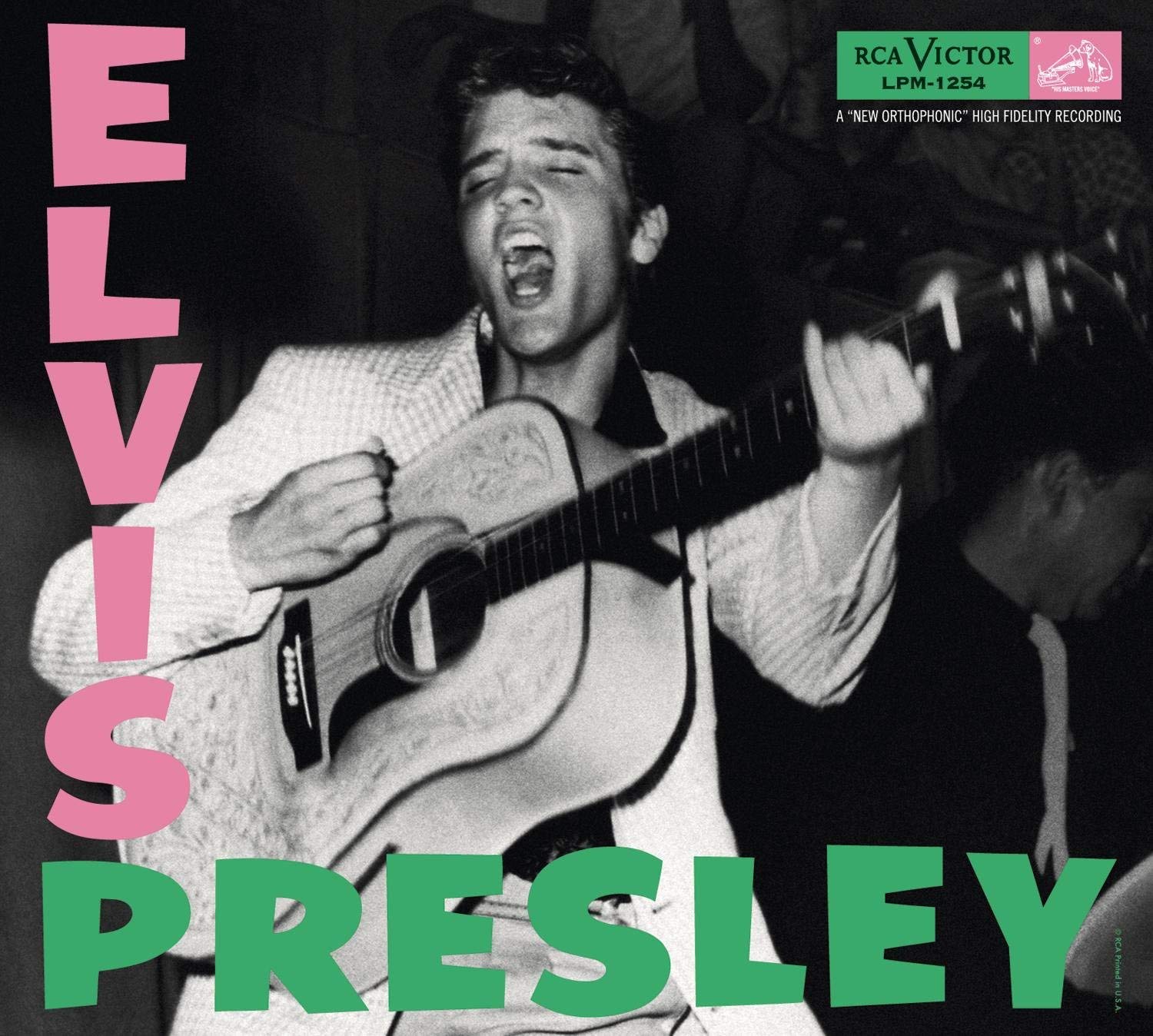
Until the inflow of Elvis, entertainers had typically been restrained and on best behaviour while on phase. Only the Mississippi singer who became known as The Male monarch threw away that rulebook, thrusting his hips in an overtly sexual fashion and running wild with a raw, primal free energy.
Ths dramatic shot, taken at the Fort Homer Hesterly Armory in Tampa, Florida past William V. 'Red' Robertson, captures him in a full, convention-defying flow. With its advised and colourful lettering, the design of this iconic cover was later echoed by British punks The Clash for the encompass of their 1979 album, London Calling.
02. Sgt Pepper'south Alone Hearts Club Band by The Beatles (1967)
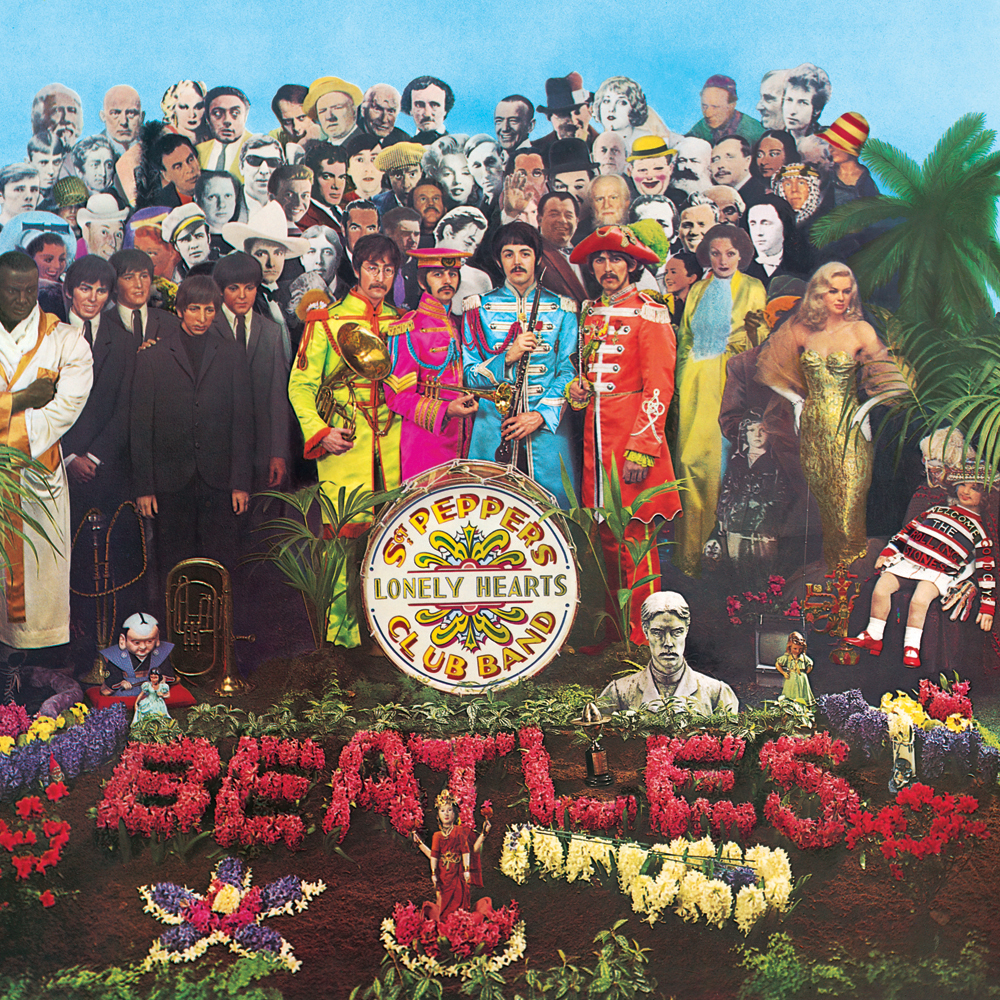
While Liverpudlian pop sensations The Beatles started out equally loveable mop-tops, they soon became influenced by the Sixties counterculture of pot smoking and protest, and their music started going in radical new directions. This culminated in Sgt Pepper's Lonely Hearts Lodge Band, which is widely credited as existence rock's first concept anthology.
The cover features ii versions of the Beatles. 1 is the real group, dressed every bit the fictional Sgt Pepper'south Lonely Hearts Club Band; the others are wax sculptures. But the real stars here are the life-sized cardboard cut-outs of famous people, from Karl Marx to Marilyn Monroe.
Designed by the popular artists Peter Blake (opens in new tab) and Jann Haworth (opens in new tab) and based on an ink cartoon by Paul McCartney, this turned out to be i of the about expensive anthology covers in history, partly considering they had to pay and then many people to utilize their likenesses. It was also the first to feature printed lyrics.
03. The Velvet Surreptitious & Nico (1967)
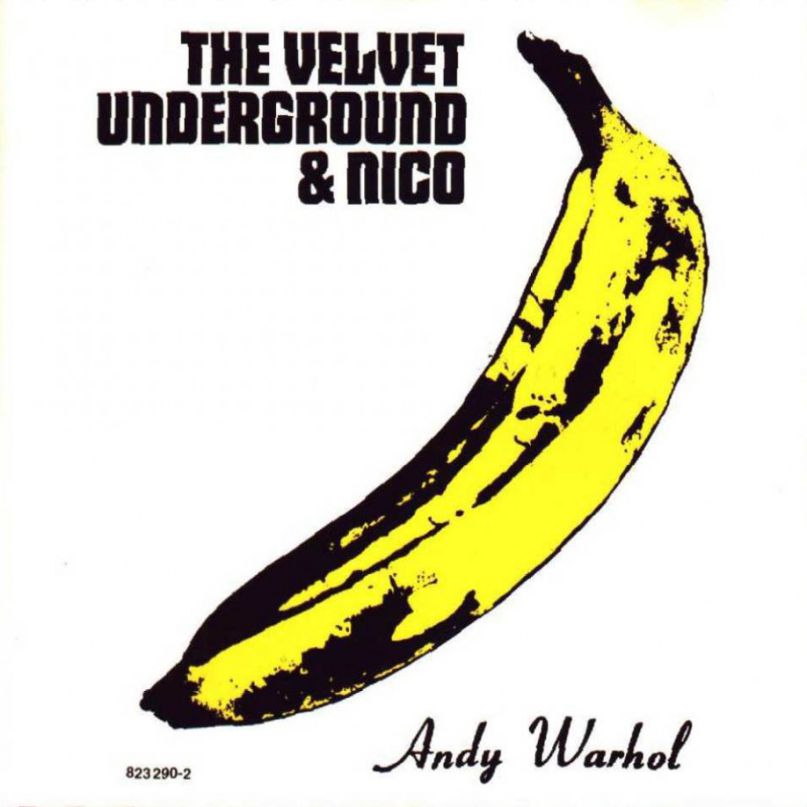
The first and best album by Velvet Underground, the psychedelic New York band fronted by Lou Reed, is known by fans every bit 'the banana album' due to the center-catching illustration on its embrace. This fruity drawing was the work of Pop Fine art (opens in new tab) icon Andy Warhol (opens in new tab), who happened to exist the group's manager, while the comprehend was designed past Acy R. Lehman.
Early versions allowed you to skin dorsum the assistant skin to recover a mankind-coloured banana underneath (utilize your imagination). Most later reissues failed to include this expensive-to-produce feature, and then the original pressings are worth a small fortune on the collectors' market.
04. Dark Side of the Moon past Pink Floyd (1973)
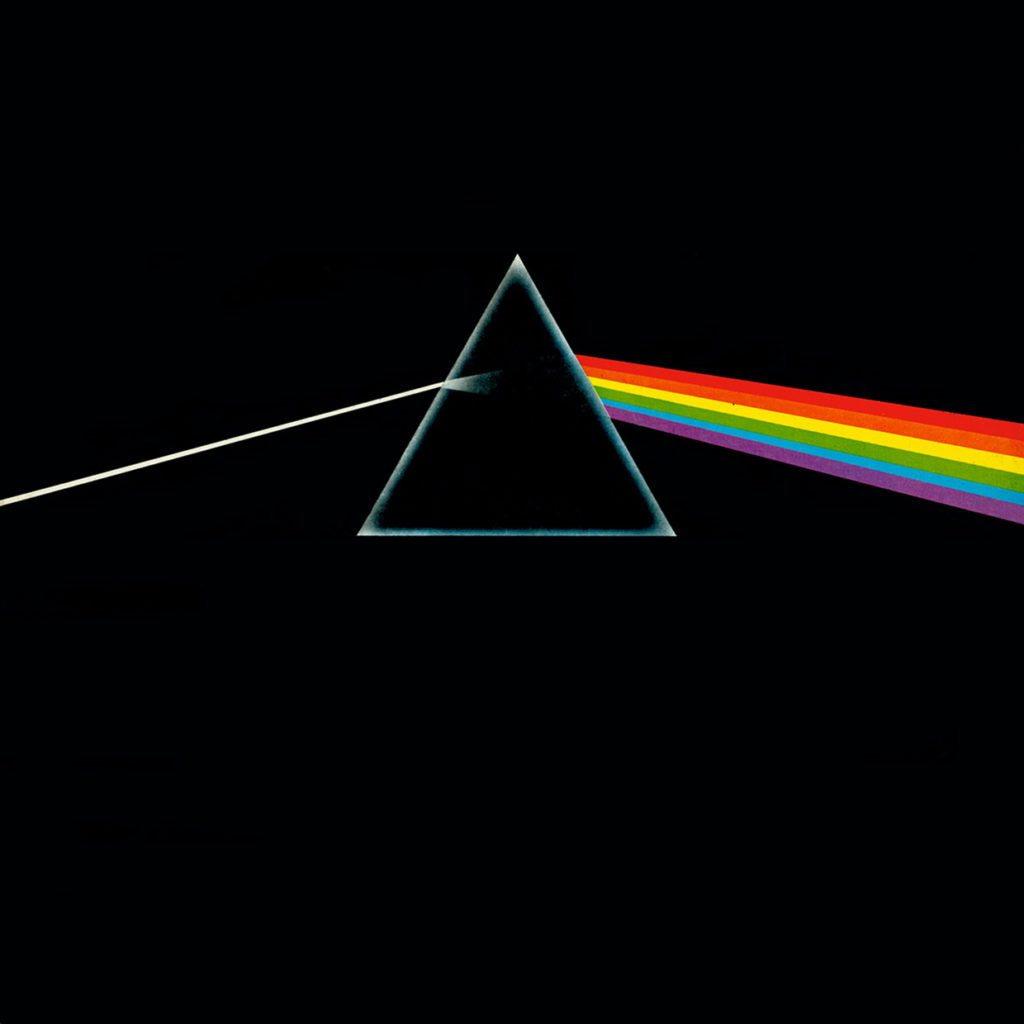
Even people who've never heard of British rock band Pink Floyd will probably recognise the iconic encompass to their 1973 album Nighttime Side of the Moon, which shows white light passing through a prism to create a spectrum of colours. It was created by Aubrey Powell (opens in new tab) and Tempest Thorgerson (opens in new tab) of Hipgnosis, the designers behind some of history's best-known album covers, including Led Zeppelin's Houses of the Holy, Black Sabbath'south Never Say Die and The Scorpion's Lovedrive.
They came up with the concept, which was inspired by an paradigm of a prism found in a photography book, after an all-dark brainstorming session. The design raised eyebrows at the time for including neither the band'southward name nor the album'south title.
05. Never Mind The Bollocks by the Sexual practice Pistols (1977)
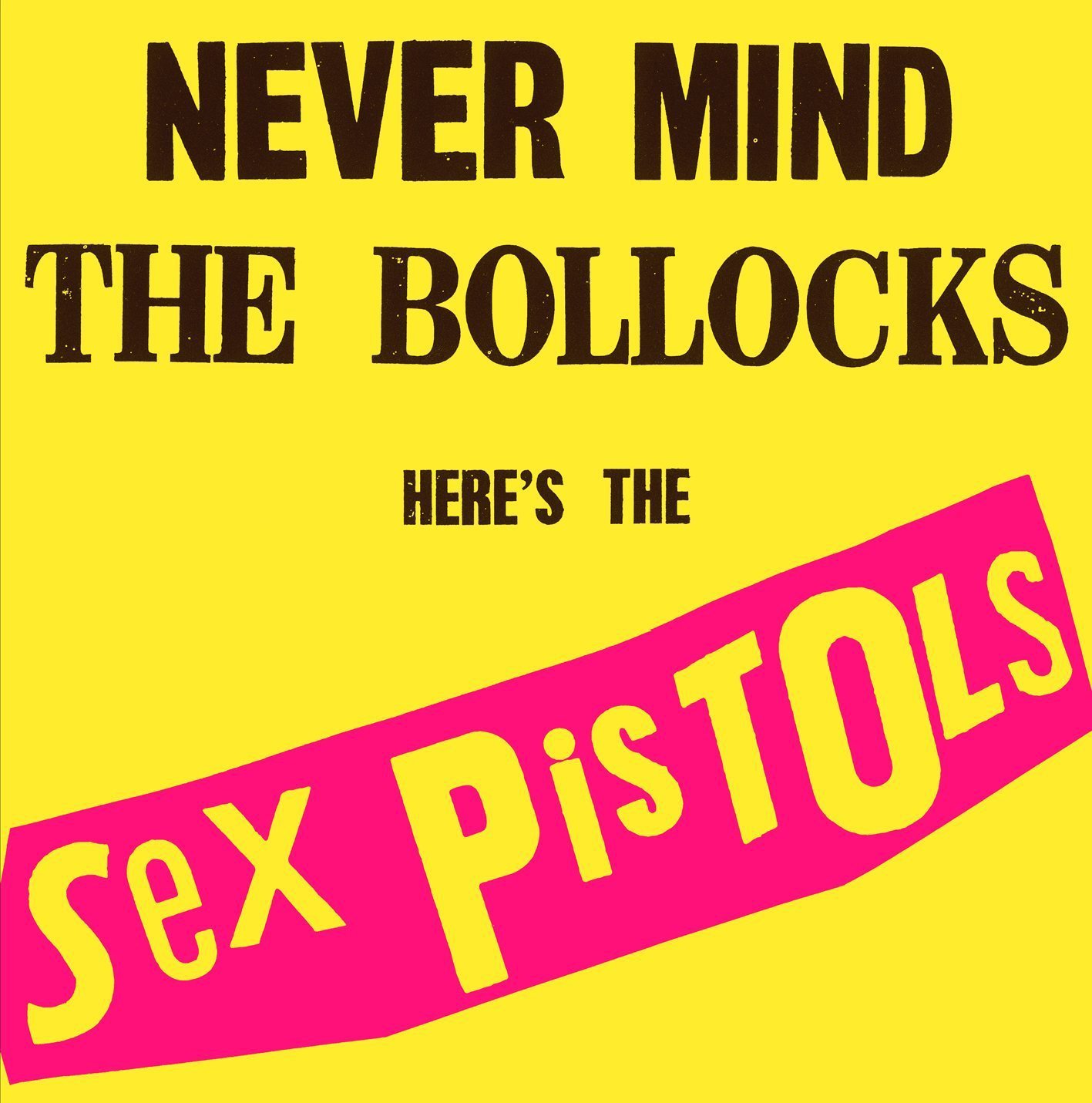
While the psychedelic era saw album covers usually feature intricate, surreal and lavish illustrations, punk stripped everything to its bare essentials. And the debut album of Britain's loudest and angriest punk rockers Sex Pistols, designed by Jamie Reid (opens in new tab), was a truthful statement of intent.
The use of obscenity, bandage in the kind of cut-out lettering ordinarily associated with criminal ransom notes, was shocking to audiences of the time. The effect was heightened by the sleeve'southward pulp colour palette, which was based on a series of stickers distributed past the Situationalist political movement (the originals read: 'This Store Welcomes Shoplifters').
The use of 'bollocks' (a term in British English that means both 'nonsense' and 'testicles') led to a police raid on a Virgin tape store that stocked the tape. In the resulting court case, Virgin was successfully defended from obscenity charges past John Mortimer, now all-time known equally the author of Rumpole of the Bailey. As he left the courtroom, the group'south singer, Johnny Rotten, joyfully exclaimed to a reporter: "Great! Bollocks is legal. Bollocks! Bollocks! Bollocks!"
06. Unknown Pleasures past Joy Sectionalization (1979)
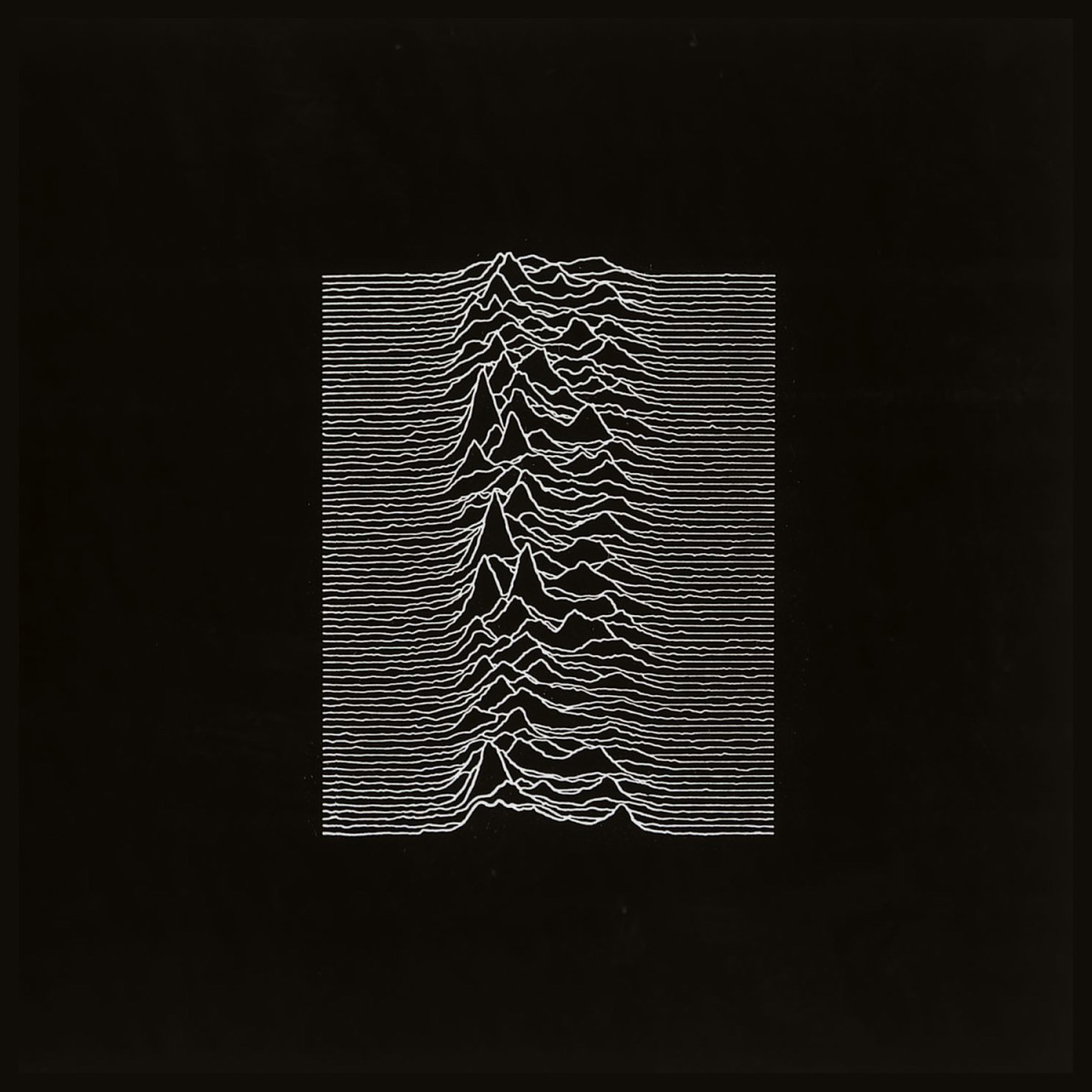
When Salford mail service-punk band Joy Division released its debut album, it didn't exactly set the world on fire. But today it's considered a classic, and its entrancing cover art, designed by Peter Saville (opens in new tab), adorns millions of T-shirts and posters worldwide.
It was the group's lead guitarist, Bernard Sumner, who originally chose the image. It's a visualisation of the radio waves emitted by a pulsar; a neutron star that is created after a dying sunday collapses in on itself.
Originally named CP 1919, the pulsar in question had been discovered in Nov 1967 by educatee Jocelyn Bell Burnell and her supervisor Antony Hewish at Cambridge Academy. Sumnar found the image in the Cambridge Encyclopaedia of Science; Saville then reversed it from black-on-white to white-on-black and printed information technology on textured carte du jour.
07. Rio by Duran Duran (1982)
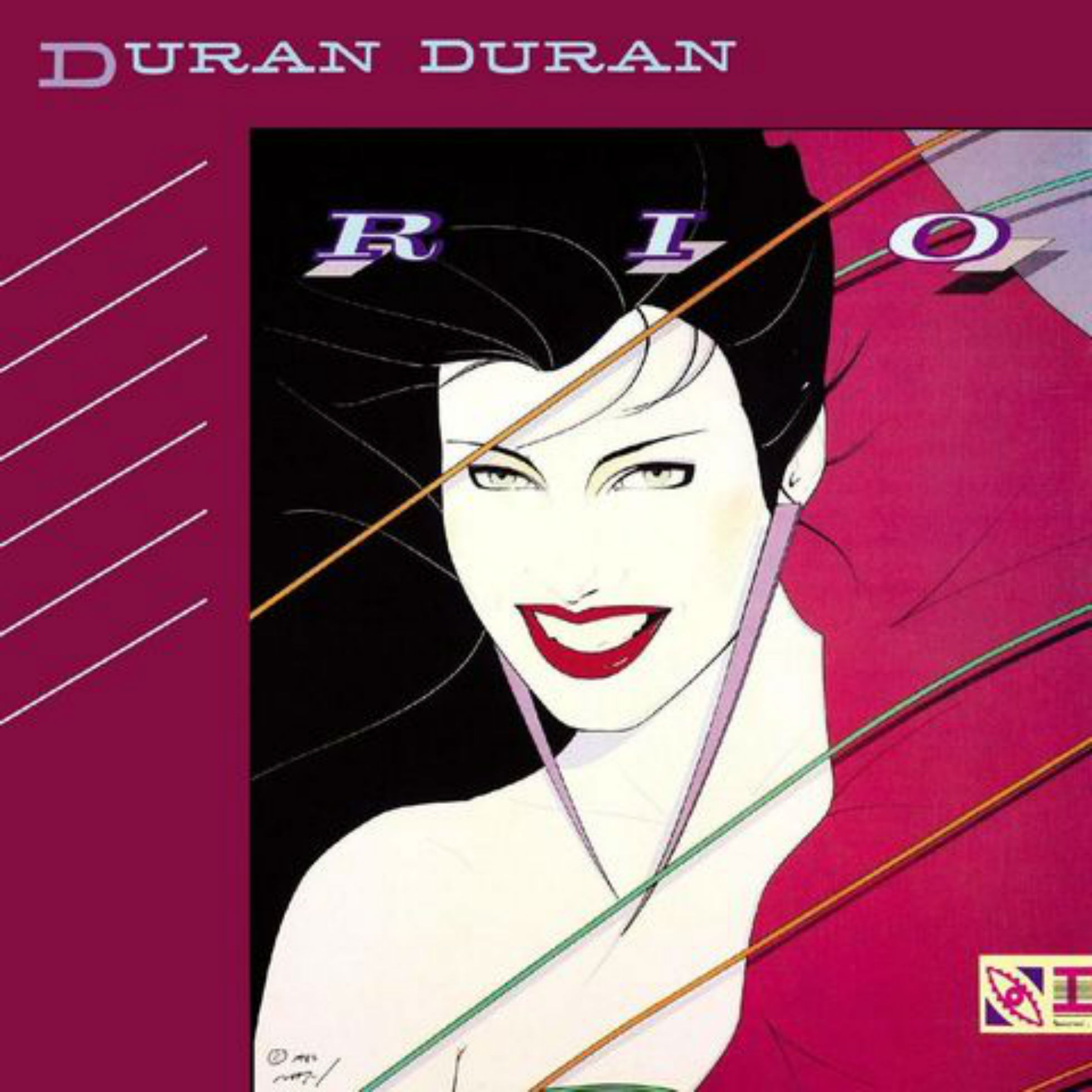
Subsequently all the bleak, moody aggression of seventies punk, many in the eighties were prepare for the return of fun and glamour... simply that didn't mean they wanted old-fashioned and cheesy. Duran Duran, a band from Birmingham, England, were among the leading lights of the New Romantic movement, which cleverly combined an art-school sensibility with the kind of popular-funk stylings a mainstream audition could actually trip the light fantastic toe to.
The cover blueprint for their 2d studio anthology, Rio, pulls off the same trick. It was designed by Malcolm Garrett (opens in new tab) and illustrated past Patrick Nagel (opens in new tab), who was known for celebrating the female person class in a style that combined the Art Deco tradition with contemporary fashion designs.
Nagel's depiction of the lead vocal's championship grapheme is beautifully minimalist, with an inventive colour palette that was instantly middle-catching and tendency-defining.
08. War past U2 (1983)
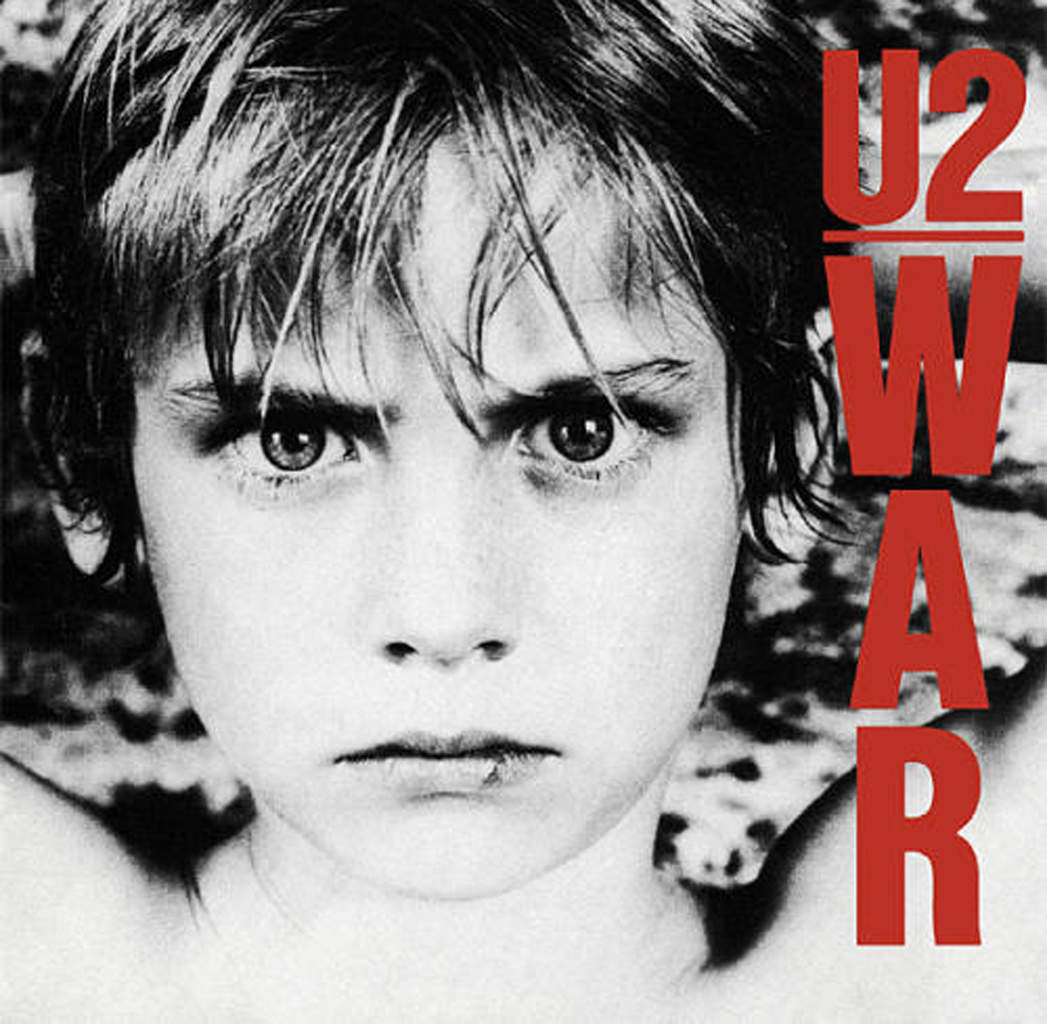
U2's vocalizer Bono may present exist known for having dinner with Popes and Presidents. But while he's now Mr Mainstream, early on U2 was raw, edgy and raucous. And with its controversial songs about war and conflict, like Sunday, Bloody Sunday, their third studio album could be considered the apex of their rebellious youth.
Rather than going the obvious route of picturing a battle scene, though, Irish gaelic graphic designer Steve Averill (opens in new tab) took the inspired conclusion to instead apply a child, powerfully conveying the loss of innocence created by war. The boy staring intensely and unsettlingly at the camera is Peter Rowen (opens in new tab), the brother of the artist Guggi (opens in new tab), who is a friend of Bono'due south.
Rowen appeared on three U2 albums in full, and is at present himself a professional lensman. He'south fifty-fifty brought things full circumvolve, by shooting U2 in concert.
09. Licensed to Ill by Beastie Boys (1986)
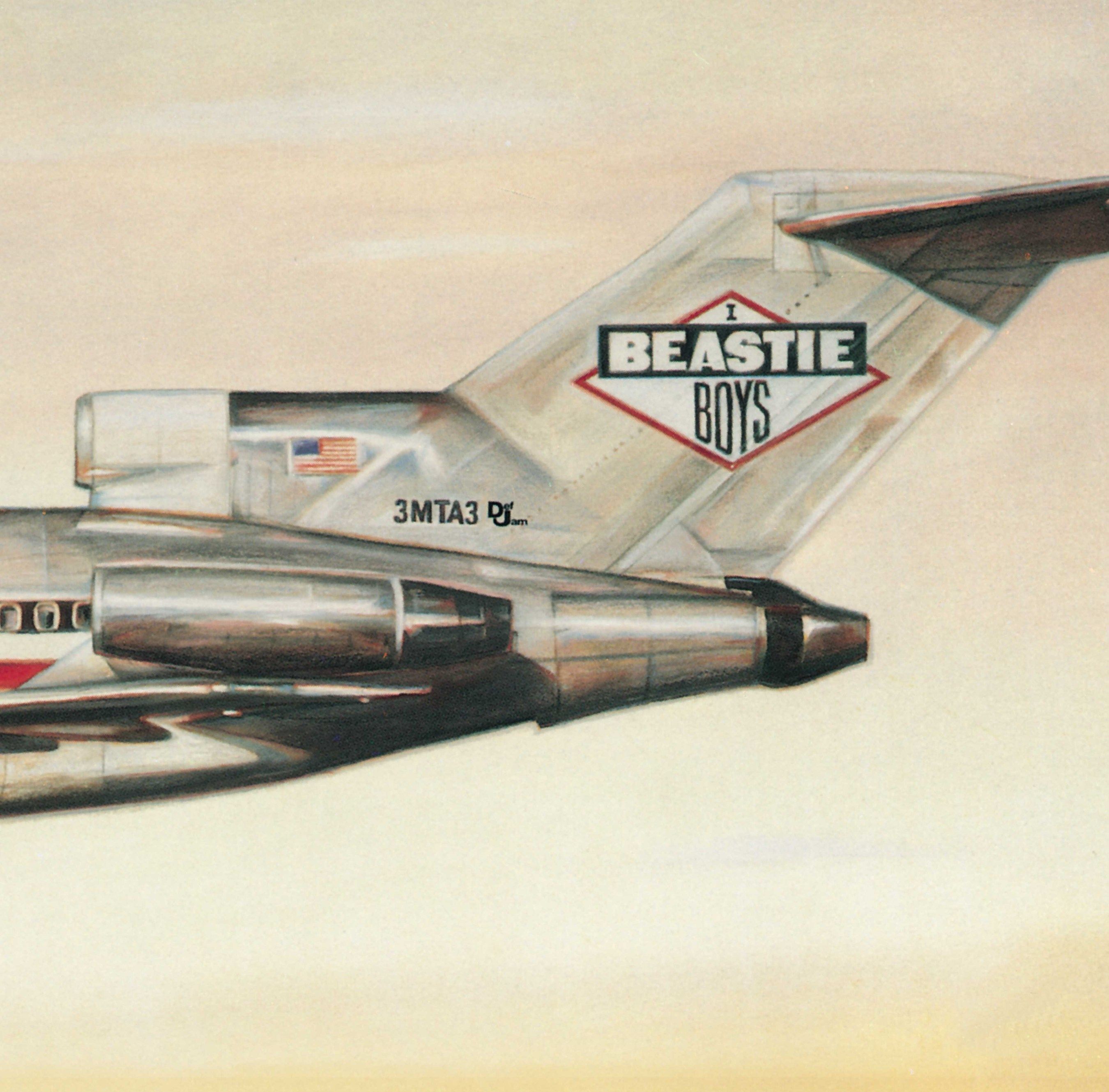
At a time when music was largely divided forth genre and racial lines, 3 Jewish boys brought together rap and heavy rock in one album, without compromising on the raw, angry energy of either.
Designed by Steve Byram (opens in new tab) and illustrated past World B. Omes (opens in new tab), the cover concept for Licensed to Ill was basically a parody of Led Zeppelin's private jet; a symbol of swollen seventies stone excess that couldn't have been farther removed from the male child-next-door antics of the Beastie Boys.
And only in case you needed the irony spelling out, the plane'due south tail number, 3MTA3, spells "Swallow Me" backwards.
10. Fright of a Blackness Planet by Public Enemy (1990)
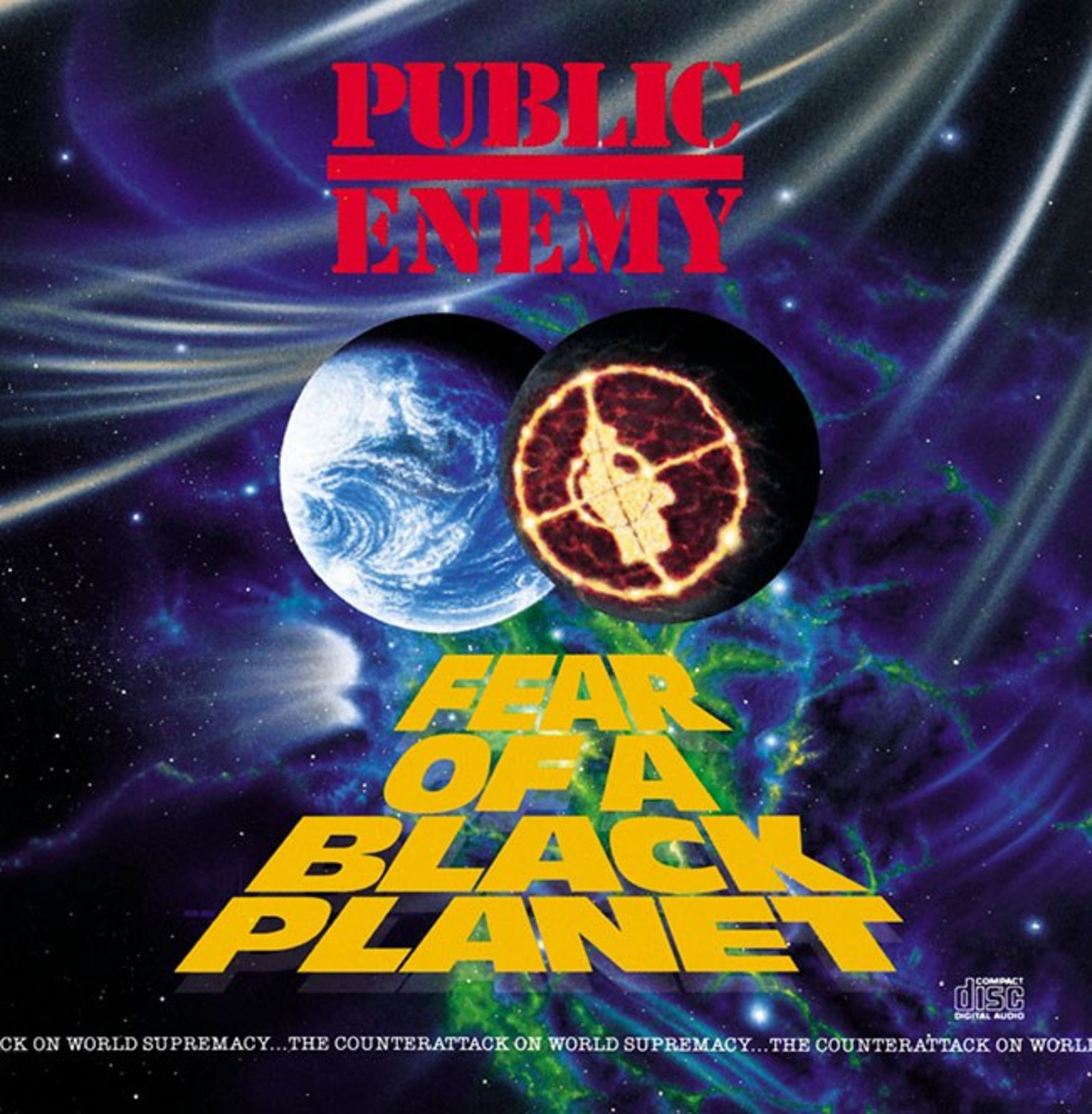
Musically and lyrically, Public Enemy'southward tertiary studio album remains one of the most inventive and ambitious rap albums of all time. From the biting social commentary of 911 is a Joke, most the variance in police response times between black and white neighbourhoods, to the revolutionary rage of Fight the Power, this record changed the game and has arguably nonetheless to be bettered.
The cover design, too, is a archetype. Group leader Chuck D, who had himself studied graphic design at New York's Adelphi University, came up with the concept of two worlds (a 'black' planet and World) eclipsing. The group enlisted B.East. Johnson (opens in new tab), a NASA illustrator, to create the design, and the apocalyptic result is a fantastical commentary on the racial paranoia of white nationalism.
11. Nevermind by Nirvana (1991)
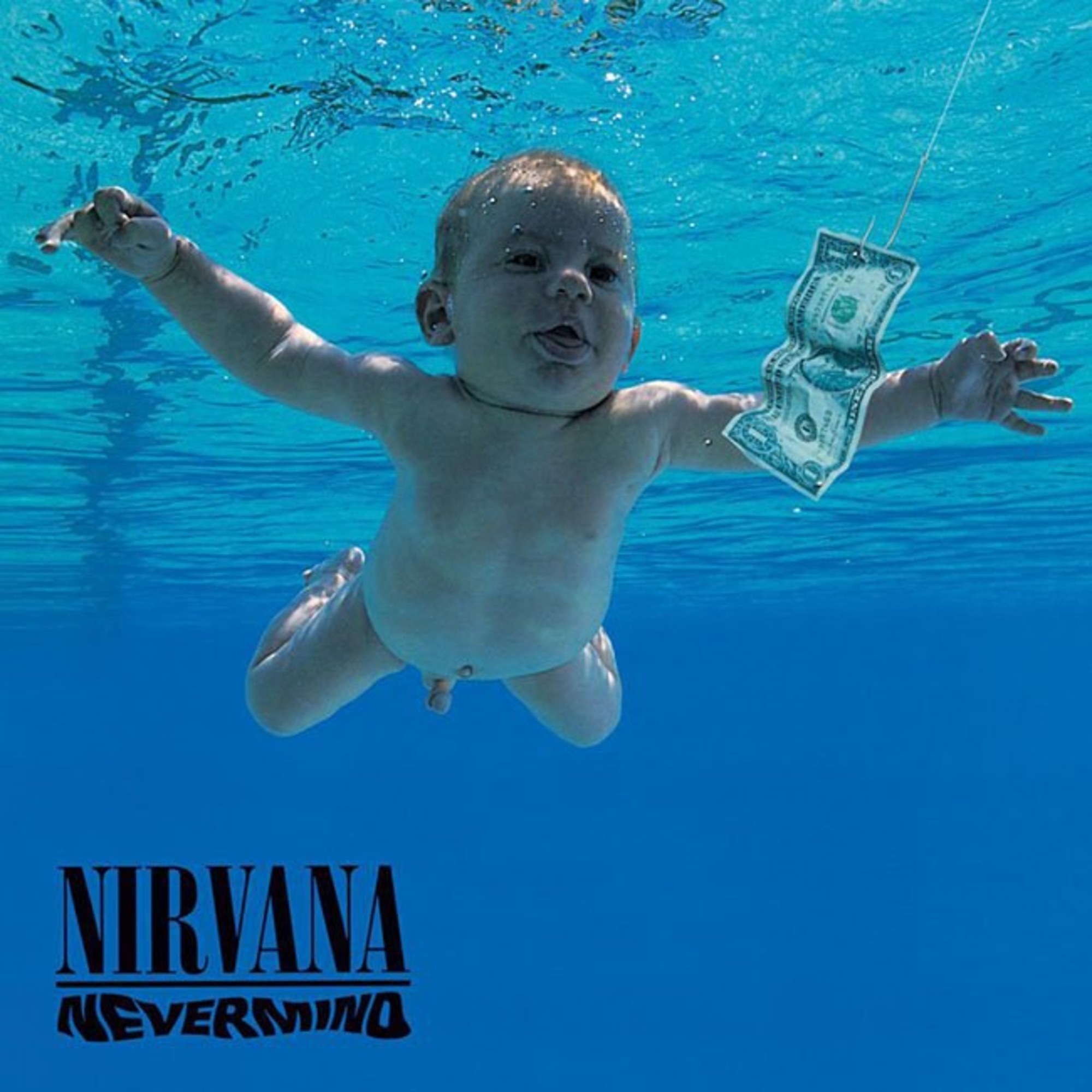
At the beginning of the 1990s, it seemed similar rock music was starting to go stale and echo itself. And then came grunge, which brought everything dorsum to its basics and acted similar a big 'reset' button, just as punk had washed ii decades earlier. Nirvana'southward second album brought grunge into the mainstream, following the success of their number one hit Smells Like Teen Spirit. And its unusual cover was attention-grabbing to say the to the lowest degree.
Singer Kurt Cobain had come up with the thought while watching a TV documentary on water births with drummer Dave Grohl. Geffen's art director Robert Fisher (opens in new tab) dug out some stock images of underwater births, but they were as well graphic to put on an album and would have cost $7,500 to licence. So instead they commissioned photographer Kirk Weddle (opens in new tab) to shoot some bespoke images in a Pasadena swimming pool for just $one,000. (The dollar and fish claw were added later on.)
The kid he shot was four-month-quondam Spencer Elden, the son of ane of Weddle's friends. He's at present 27 and working as an artist in LA, while Weddle has continued to exist an advertizing photographer specialising in underwater work.
12. Screamadelica past Primal Scream (1991)
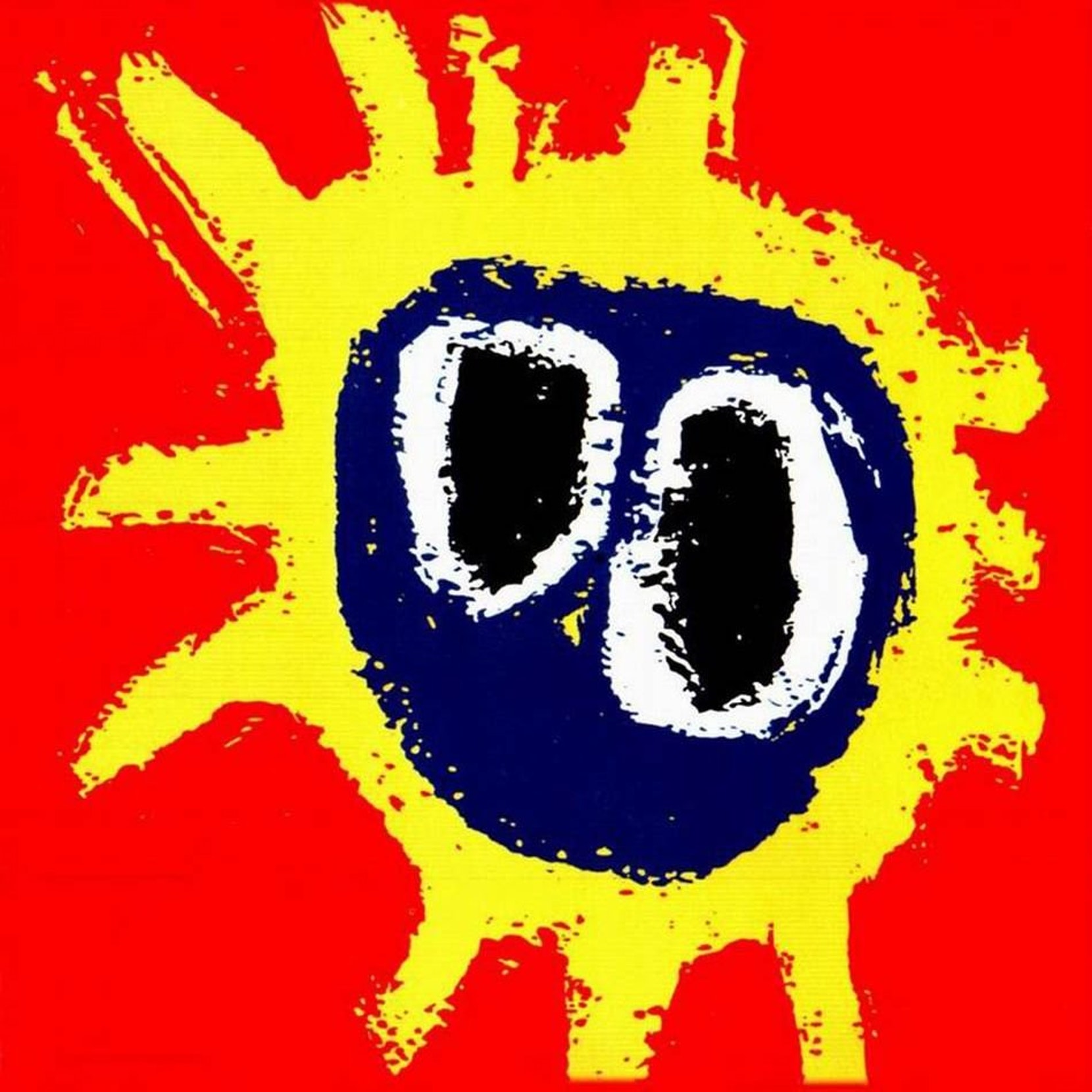
Throughout the 1980s, the divide between indie music and dance music couldn't accept been more marked. Then came acid house, ecstasy, rave... and all of a sudden fans of moody rock music became much more open up to the idea of repetitive beats. A major landmark in the resulting crossover was Primal Scream's third anthology, which brought together rock, psychedelia, dub, business firm and gospel in one glorious concoction.
Its encompass was the work of Paul Cannell, a London artist known for combining a punk aesthetic with exuberant colours, using unusual media such as business firmhold undercoat paint and car body filler. The ring's singer Bobby Gillespie took a detail from one of Cannell'south paintings, altered the background colour to a hot crimson, and the classic 'lord's day' prototype was the event.
Tragically Cannell took his own life in 2005. Just this classic cover, along with his piece of work for bands similar Manic Street Preachers, The Telescopes, Flowered Up and Shonen Knife, will surely live for an eternity. It was even recreated as an official postage stamp stamp in 2010, as part of the Imperial Mail's Classic Album covers collection (opens in new tab).
thirteen. Parklife by Blur (1994)
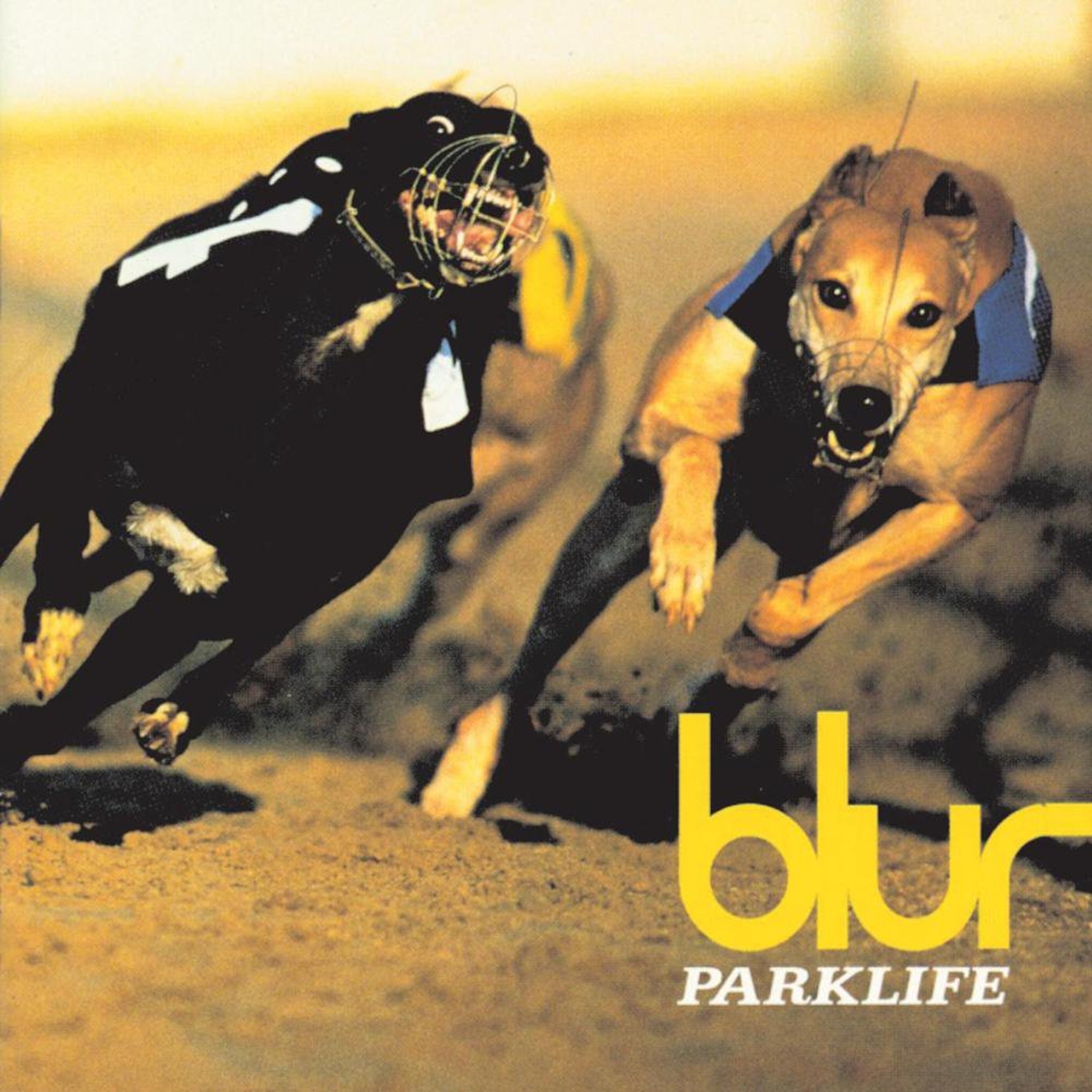
Every bit the 1990s progressed, British youngsters started to tire of ecstasy-fuelled raves, and a vacuum opened up in youth culture. This was quickly filled by a return to the quondam-fashioned pursuits of boozing and listening to rock bands... but with subtle dashes of post-modern irony to proceed things interesting.
Best at managing this contradiction were Blur; middle-class student types who all the same appealed to the masses with their mockney accents, Kinks-influenced tunes and clever appropriation of working course culture. Parklife, their third studio album, saw them at the height of their powers, from Girls and Boys, which poked fun at Social club xviii-30 holidays, to the championship track, which guest-starred Quadrophenia actor Phil Daniels to vivid comic effect.
All this post-mod authenticity was topped off by a vivid cover based on the unlikely topic of greyhound racing. (Other images Blur considered were a fruit and veg marketplace stall, a betting shop window... yous get the idea.)
The image used, shot by photographer Bob Thomas, was taken from a stock epitome library and was not, opposite to popular belief, shot in Walthamstow. The confusion comes because a separate shoot for the inside embrace was carried out at the famous E London runway, which has since been converted into flats.
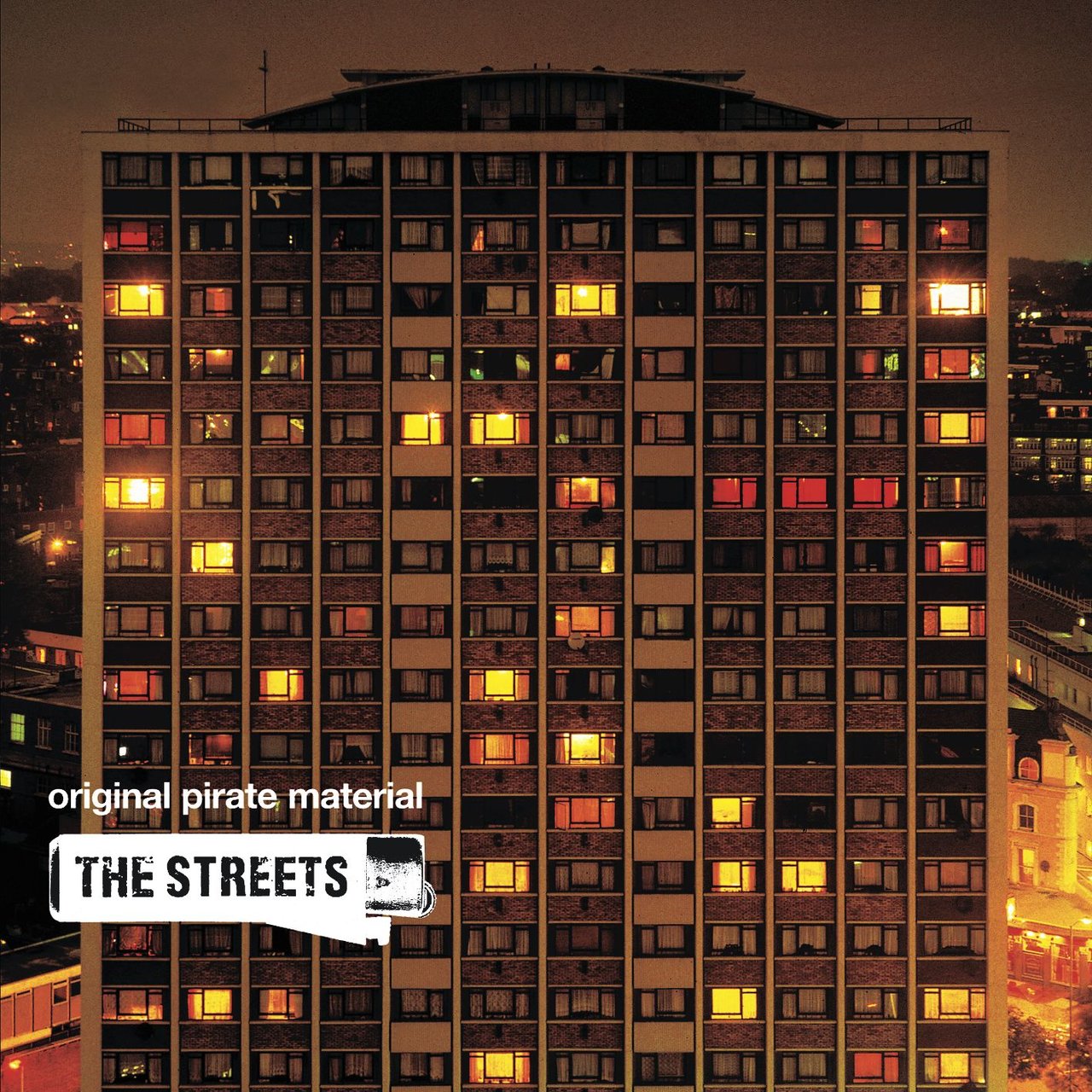
14. Original Pirate Material by The Streets (2002)
When Mike Skinner, aka The Streets, made a rough and ready UK garage album in his bedchamber, he was aiming it at typical fans of Great britain garage. Instead, his funny and poetic lyrics led him to exist instantly adopted by middle-class intellectuals, a fact that baffles him to this day.
Skinner's comprehend by the intelligensia may also take been subconsciously been inspired by the highbrow nature of his cover fine art. His debut album features an image titled Towering Inferno, shot in 1995 by German artist and photographer Rut Blees Luxemburg (opens in new tab). Office of a series called London: A Modern Project that focuses on the capital at night, the shot fits nicely into the "sex, drugs and on the dole" narrative spun past Skinner throughout his debut.
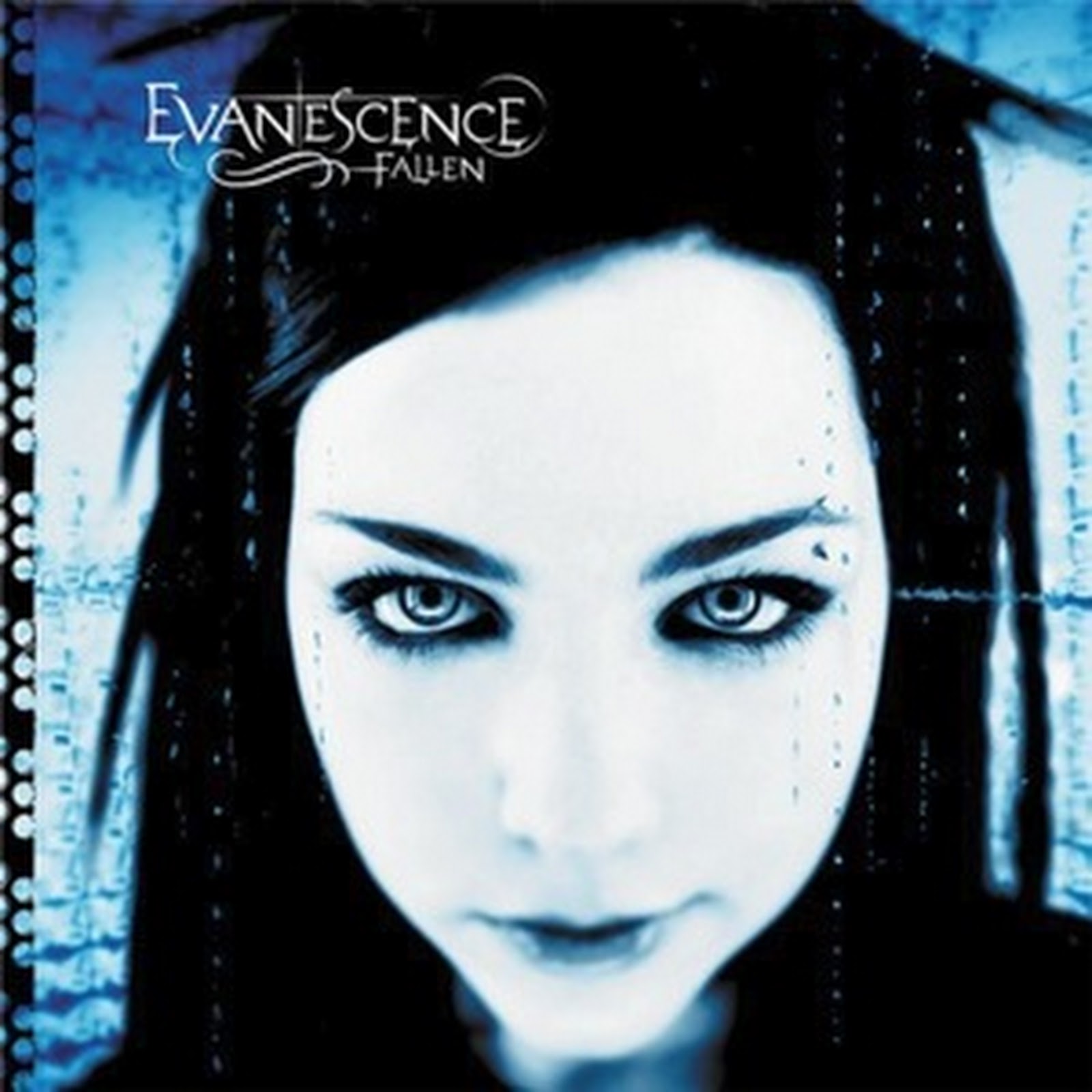
15. Fallen by Evanescence (2003)
One of the best-selling albums of the 2000s and the winner of 2 Grammys, Fallen was the debut of Evanescence, a genre-defying Christian band that combined elements of nu metal, alternative metal and goth. But its influence went mode beyond 'just' music. Countless youngsters since its release have testified to the way its lyrics, which deal with subjects of alienation, depression, suicide and death, have helped them deal with the angst of 'feeling different' from their peers.
Seen in that light, the anthology'south cover art, featuring frontwoman Amy Lee in defiant alt-daughter pose, was perfectly chosen. The vocalist is staring right at the viewer, provoking a feeling of empathy and shared feel, just at the aforementioned time the blurry nature of the image and the cold, harsh colour palette speak to feelings of helplessness and isolation. It'due south non necessarily the happiest of scenes, but for many fans, information technology'south been an essential and life-enhancing one.
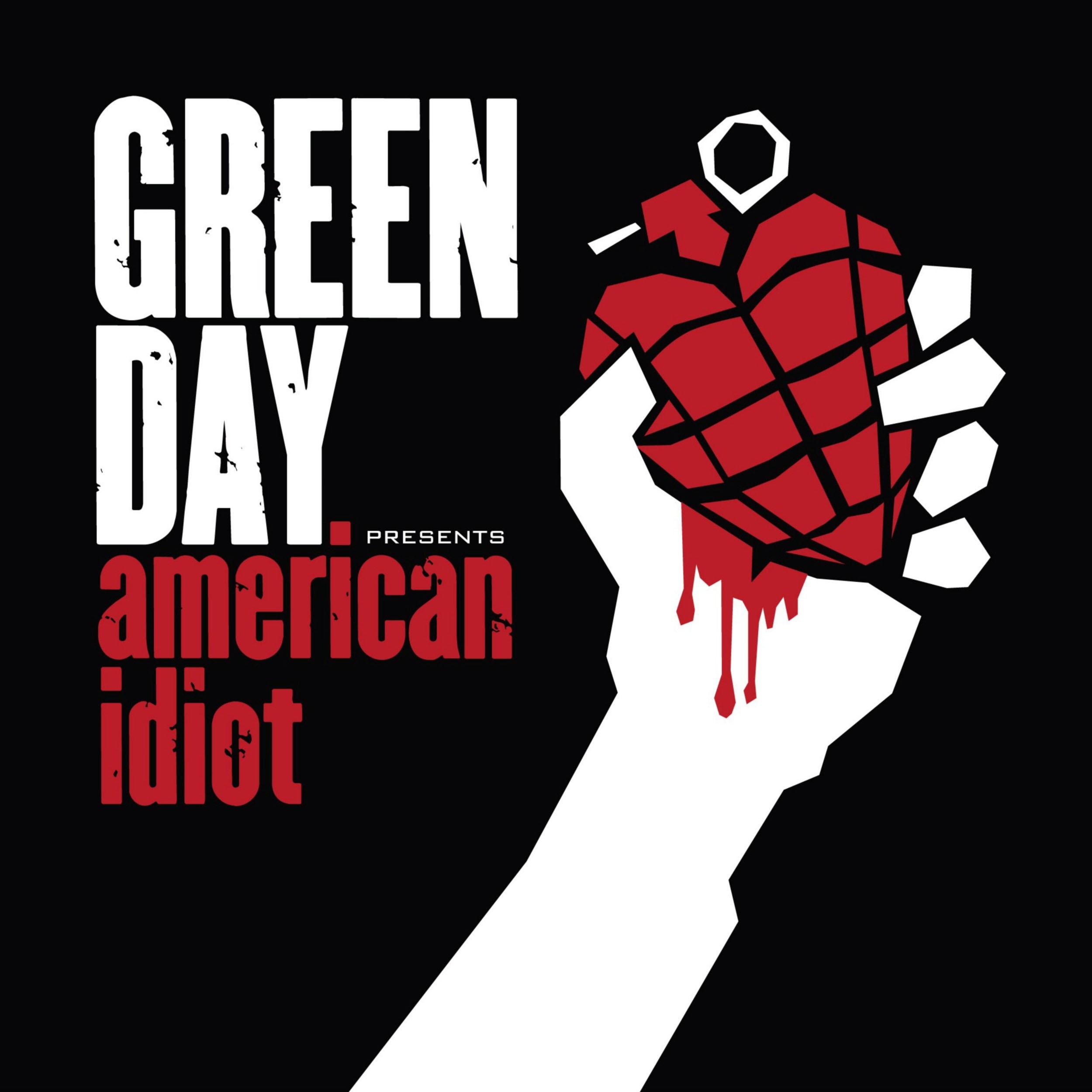
16. American Idiot by Greenish Day (2004)
A punk rock opera might sound like a contradiction in terms, but Green Day went alee and did it anyway. This concept album follows the story of Jesus of Suburbia, a teenage anti-hero, and it spawned five striking singles, including the incendiary title track; a stinging critique of correct-fly American media that has arguably never been bettered.
A game-changing album demands attention-grabbing artwork, and this comprehend design, featuring a heart-shaped hand grenade held in a claret-soaked fist, delivers information technology in spades. It was created past Chris Bilheimer (opens in new tab), an art director who studied at the Academy of Georgia with R.E.Chiliad. vocalizer Michael Stipe.
The pattern takes in a number of influences, and is said to be inspired by Chinese communist propaganda art, a lyric from the song She's a Rebel ('he's holding on my heart like a paw grenade"), and Saul Bass's poster for the 1955 film The Human with the Golden Arm.
17. Demon Days past Gorillaz (2005)
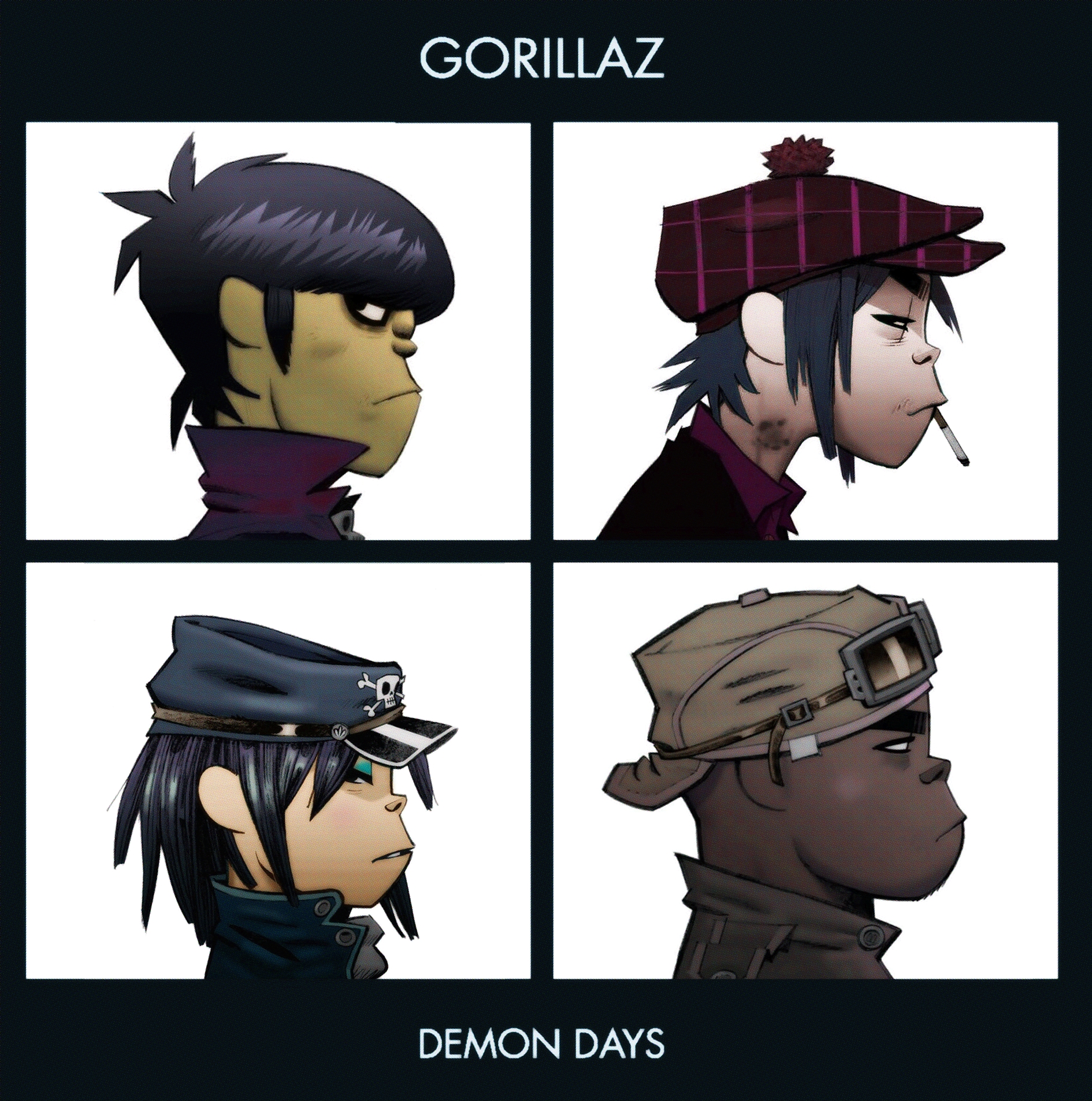
As the world strode confidently from the 20th to the 21st century, suddenly everything was going from analogue to digital. And Mistiness vocaliser Damon Albarn and Jamie Hewlett (opens in new tab), the comic creative person behind Tank Girl, decided to get ahead of the curve by forming Gorillaz (opens in new tab), the globe's get-go virtual band.
Combining hip-hop and electronica, the musical output of the band was groundbreaking enough, but they further excited audiences and the media by presenting themselves in the course of cartoon characters, from magazine covers to music videos to websites. At a fourth dimension when most people were but learning what an avatar was, it was a clever idea, and 1 that effortlessly translated to the embrace of this, their 2nd and seminal album.
eighteen. Built-in to Die by Lana del Rey (2012)
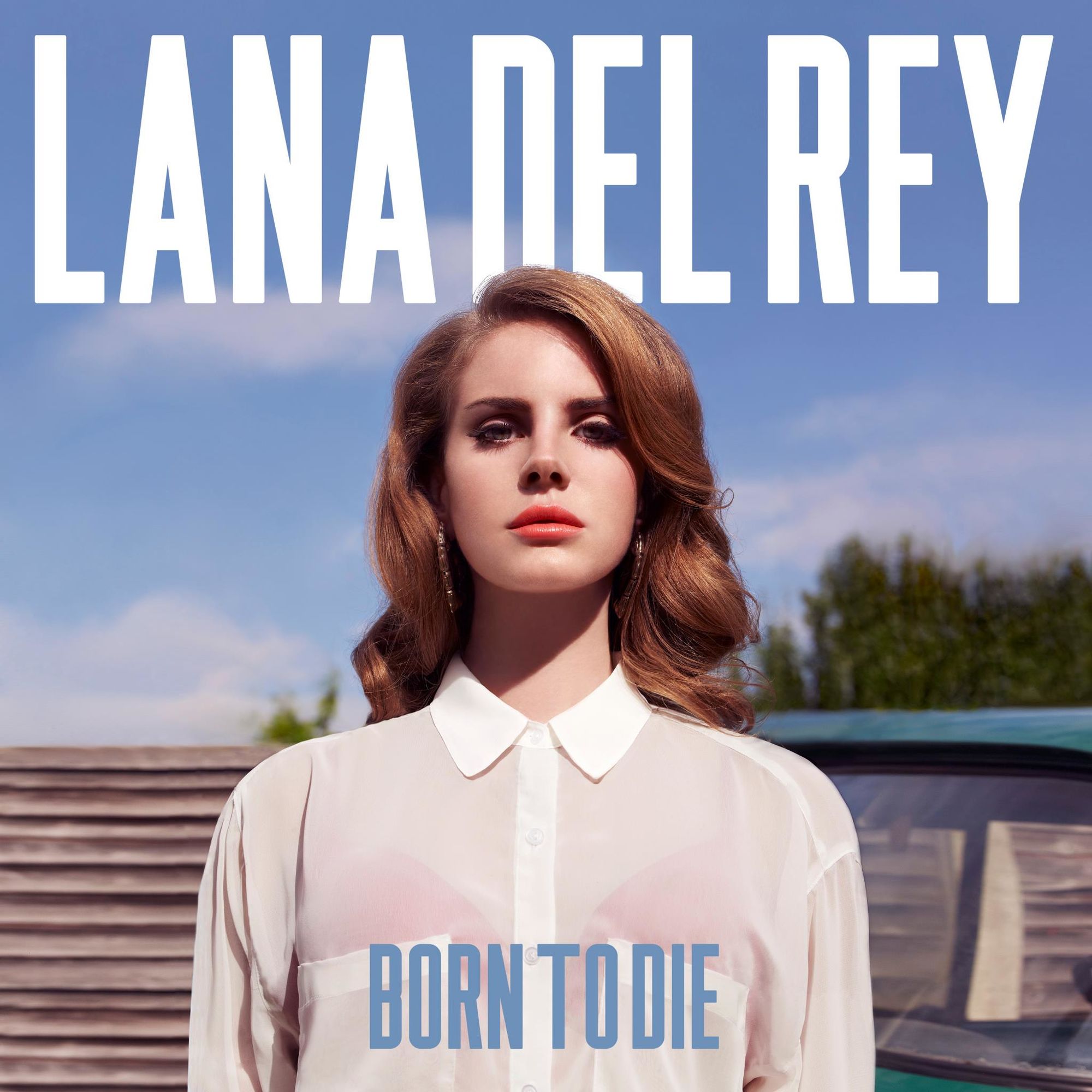
One of only iii albums released by a female artist to have spent more than 300 weeks on the Billboard 200, Born to Dice combines elements of indie pop and trip-hop with New York singer Lana del Rey's haunting vocals in a way that's far greater than the sum of its parts. And the cover, art-directed past David Bowden (opens in new tab), was suitably and beautifully epic.
The impactful design combines an arrestingly mournful image of the vocalizer, photographed by Nicole Nodland (opens in new tab), with big and bold typography based on a bespoke font, adding a truly cinematic feel to the blueprint.
nineteen. 1989 by Taylor Swift (2014)
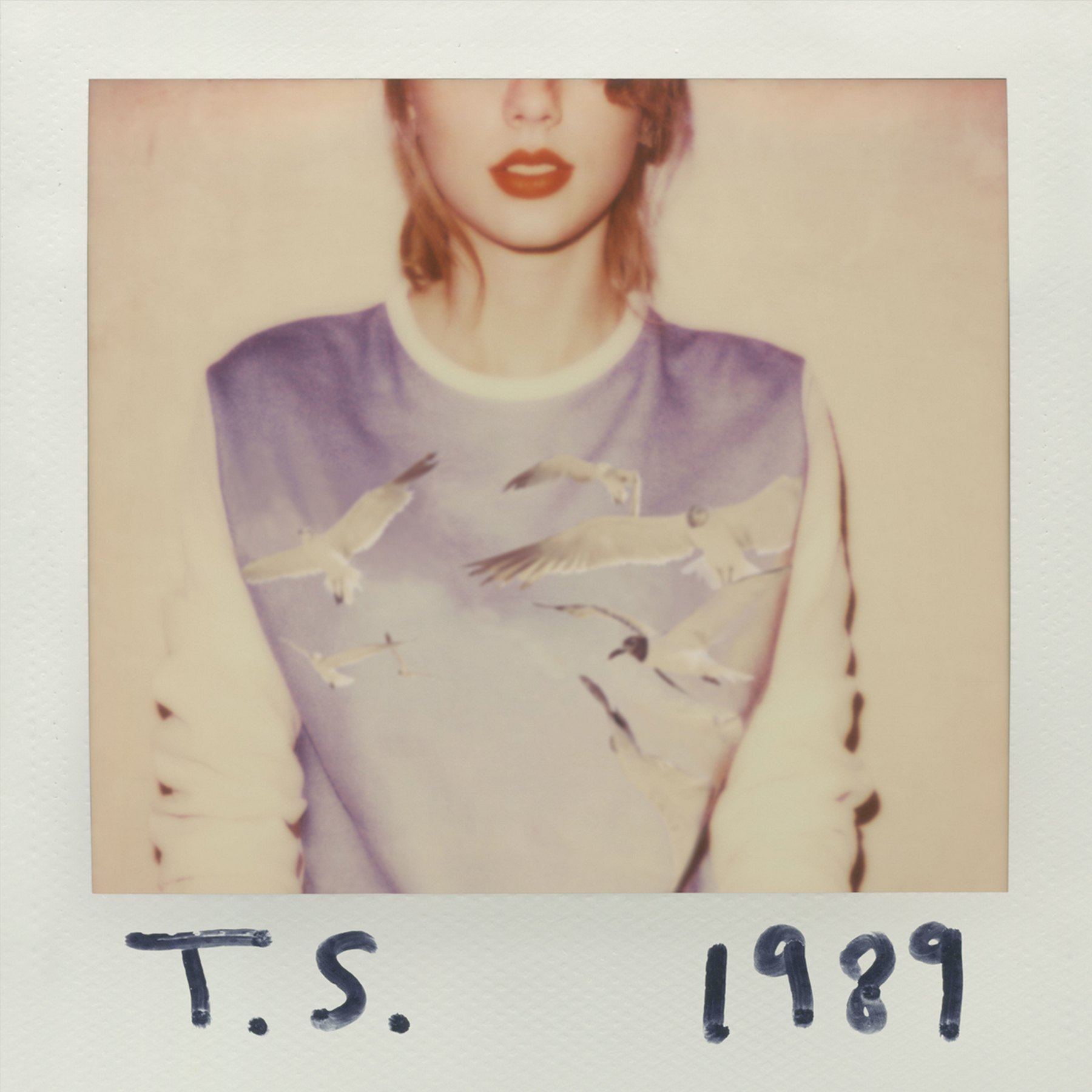
1 of the biggest stars of the decade, land-turned-pop singer Taylor Swift has won fans by beingness open and personal almost herself, and the cover of her beginning 'pure' pop anthology, 1989, fits perfectly into that narrative.
Light years abroad from the pouting, airbrushed glamour shots of her rivals, it features just a simple Polaroid of the vocalizer, cutting off at the eyes, with T.S. 1989 (the twelvemonth of her nascence) scrawled underneath. Nothing complicated, null overblown... and all the better to brand fans feel connected to 'pop'southward everywoman'.
20. Lemonade by Beyonce (2016)
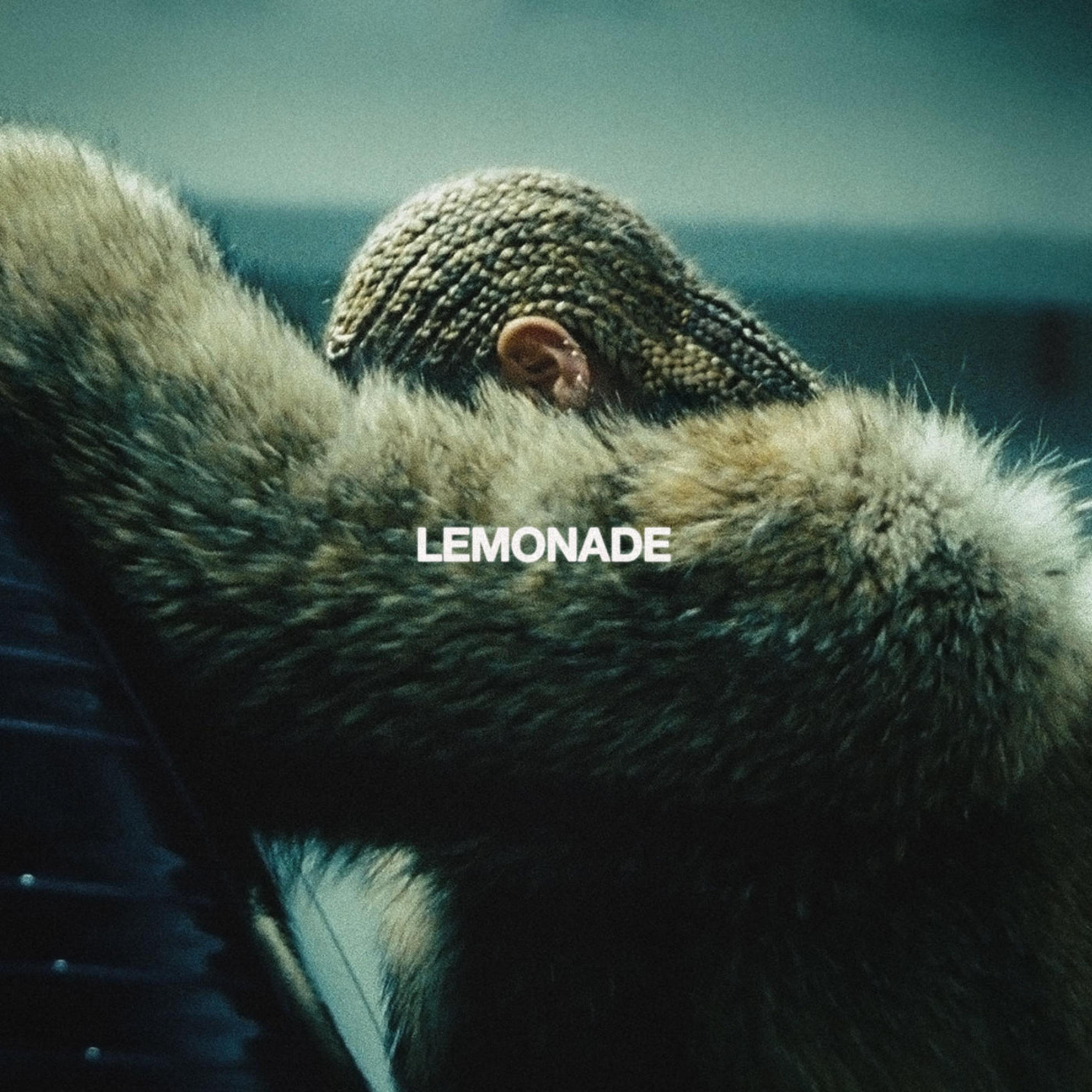
Let'due south be frank; in the mod era, with streaming taking over from downloads and social sharing replacing record-store browsing, album artwork has declined in importance. Only if an creative person is big enough, it withal makes an impact, and few artists have been bigger in the 2010s than Beyonce.
In a sign of changing times, the vocalist's sixth album, Lemonade, was kickoff made available through Beyoncé's co-owned streaming service Tidal (opens in new tab), a day before existence released for digital and physical purchase. The comprehend shows the vocalizer standing next to a machine, wearing a fur glaze and cornrow braids, hiding her face behind her arm.
Information technology'due south a still from the shooting of the Don't Hurt Yourself video, directed past Beyonce and Kahlil Joseph (opens in new tab). Only there's no official explanation about why this particular shot was chosen, leaving fans to speculate on the meaning of the cornrows (symbolising black culture?), fur coat (symbolising fame and riches?) and hidden face (symbolising inner turmoil?).
In a social media age in which being talked about seems to exist the main aim of all celebrities, from pop stars to Presidents, this may be the perfect anthology encompass for our times.
Related articles:
- The 20 best album covers from the '70s (opens in new tab)
- vii must-read books for design students (opens in new tab)
- 27 inspiring examples of vintage poster design (opens in new tab)

Tom May is an accolade-winning journalist and editor specialising in design, photography and technology. Author of the Amazon #1 bestseller Groovy TED Talks: Creativity (opens in new tab), published by Pavilion Books, Tom was previously editor of Professional person Photography mag, associate editor at Creative Bloq, and deputy editor at cyberspace mag. Today, he is a regular contributor to Creative Bloq and its sis sites Digital Camera World, T3.com and Tech Radar. He also writes for Artistic Boom and works on content marketing projects.
Related manufactures
Source: https://www.creativebloq.com/features/the-20-best-album-covers-of-all-time
0 Response to "Cool Song Album Covers to Draw Rock"
إرسال تعليق